
How to Add Products to a Project in Elite Core
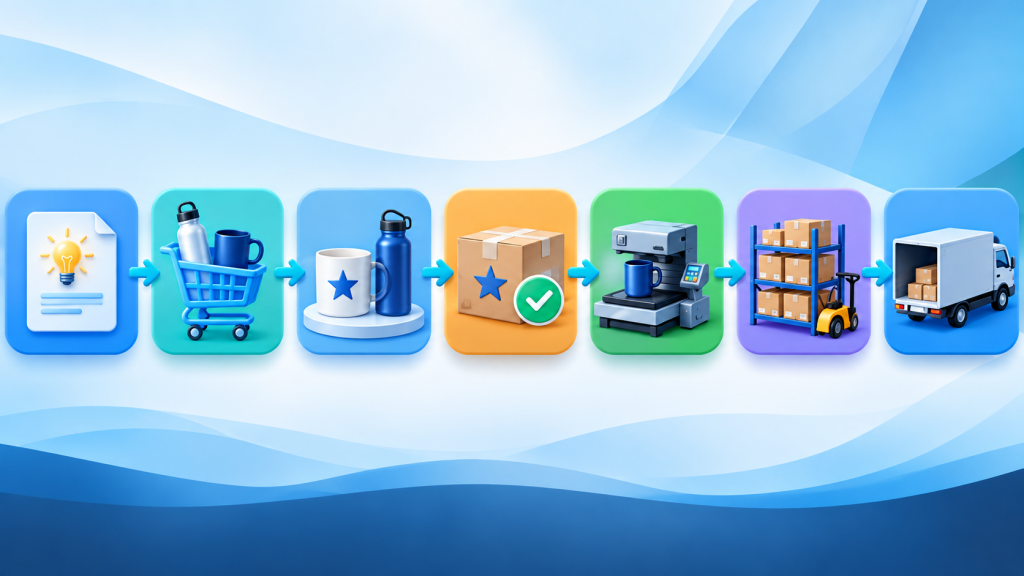
Products are added inside an existing Elite Core project. Each product becomes an order item connected to that project and may later appear on presentations, estimates, Sales Orders, Purchase Orders, production records, shipping records and invoices.
Accurate product setup is important because later documents and workflows depend on the information entered at this stage.
Before you begin
Before adding a product, confirm that:
- The correct project is open
- The project is connected to the correct customer
- The customer request is understood
- Approximate quantities are known
- The required date is known or marked as tentative
- The customer budget is known when available
- Product preferences are understood
- Decoration requirements are known when available
- The delivery destination is known when available
Step-by-step instructions
Step 1: Open the project
Open the appropriate Sales, Projects or Orders area in Elite Core. Search for the project using the customer name, project name, project number or contact name.
Warning: Confirm that you are working in the correct customer and project before adding products.
Step 2: Open the project cart or product workspace
Open the area where project products are managed. Depending on the current interface, this area may be labelled Cart, Project Cart, Products, Order Items, Product Workspace or Edit Project.
Step 3: Select the option to add a product
Select the action used to add an item. The button may be labelled Add Product, Add Item, Search Products, Add Catalogue Product or New Product. The exact label may depend on the current Elite Core interface.
Step 4: Search the product catalogue
Search using a product name, supplier name, SKU, style number, product category, keyword or brand. Examples include insulated tumbler, safety jacket, performance polo, embroidered cap, award plaque or backpack.
Broader search terms may return more useful results.
Step 5: Review the search results
Review the product name, supplier, SKU or style number, image, description, colours, sizes, variants, supplier pricing, availability and warehouse or country information when shown.
Do not select a product based only on its image.
Step 6: Select the correct product
Similar-looking products may have different suppliers, materials, sizes, colours, pricing, decoration compatibility and lead times. Confirm the exact supplier and SKU before adding the item.
Step 7: Add the product to the project
Select the product and choose the available action to add it to the project. Elite Core may open the product-editing screen immediately afterward.
Step 8: Confirm the basic product information
Review the customer-facing product name, supplier, SKU, product ID, description, image, available variants, currency and any default supplier details.
Customer-facing names should be clear and readable. Avoid leaving internal codes or confusing supplier text as the visible name when a clearer description is appropriate.
Step 9: Save the product
Save the product or complete the add-product action. The product should then appear in the project cart.
Step 10: Confirm the product appears in the cart
- The correct product was added
- The supplier is correct
- The SKU is correct
- The product image is correct
- The product was not added twice
- The product is connected to the correct project
Adding a catalogue product
A catalogue product is already available through Elite Core’s product catalogue or a supplier integration. Catalogue items may include supplier information, descriptions, images, SKUs, colours, sizes, variants and supplier pricing.
Using a catalogue product can provide faster setup, more consistent product data, easier variant selection, better supplier tracking and easier document generation.
Always review imported information for accuracy. Supplier data may not be formatted exactly as it should appear to the customer.
Adding a custom product
A custom product may be appropriate when the product is not in the catalogue, the supplier is not integrated, the item is made in-house, the product is a custom award or service, the item is a one-off special product, or supplier data is unavailable.
You may need to enter the product name, supplier, SKU or internal identifier, description, image, cost, customer price, variants, colours, sizes, quantity and decoration information.
Do not create a custom product when the correct catalogue product already exists unless there is a specific reason. Custom products require more manual review because Elite Core cannot rely on catalogue data.
What to review after adding a product
Adding the product is only the first step. Review or complete:
- Product variants
- Colours
- Sizes
- Quantities
- Supplier cost
- Customer price
- Margin
- Decoration details
- Artwork
- Setup charges
- Shipping charges
- Other services
- Required dates
- Supplier routing
These items may be covered in separate Knowledge Base guides.
What happens next
- Select product variants
- Enter colours and sizes
- Enter quantities
- Confirm supplier costs
- Set customer pricing
- Add decorations
- Upload artwork
- Add services and charges
- Review the project
- Generate an estimate
Do not generate an estimate until the product details are complete enough for customer review.
Common problems
The product cannot be found
Search by a partial product name, supplier, SKU, brand, product category or simpler keyword. A custom product may be required if the item is not available in the catalogue.
The wrong product was added
Remove or replace the incorrect product before entering pricing or generating documents.
The product was added twice
Duplicate items can create incorrect quantities, pricing and documents. Confirm whether the duplicate is intentional before deleting anything.
The wrong supplier is attached
Verify the supplier and SKU. Visually similar items may come from different suppliers.
The product image is wrong
Review the selected variant or update the image when your permissions and the current interface allow it.
The product has no colours or sizes
- The product may not use variants
- The catalogue data may be incomplete
- A custom variant may need to be added
- The wrong product may have been selected
The product price is missing
Supplier pricing may need to be entered manually. Review supplier cost and customer price separately.
The user cannot add products
Your role or the project status may prevent editing. Confirm that you are in the correct instance, have project-edit permission, the project is editable and it is not locked by a later document stage.
The product cannot be deleted
Products may become restricted after a Sales Order or another downstream document has been created. Do not force deletion without confirming whether the item exists on generated documents.
The project cart does not update
- Confirm the save completed
- Refresh the project
- Reopen the cart
- Check for validation messages
- Confirm the product was added to the correct project
Best practices
- Search carefully before creating a custom product
- Confirm the supplier and SKU
- Use clear customer-facing product names
- Review imported catalogue descriptions
- Avoid duplicate products
- Use clear product images
- Enter complete variant information
- Confirm costs before setting customer pricing
- Add decoration details before generating final documents
- Review the cart before creating an estimate
Product-addition checklist
- ☐ Correct project is open
- ☐ Correct customer is attached
- ☐ Correct product was selected
- ☐ Supplier is correct
- ☐ SKU is correct
- ☐ Product image is correct
- ☐ Product name is customer-friendly
- ☐ Product was not added twice
- ☐ Product appears in the cart
- ☐ Variants still need review
- ☐ Quantities still need review
- ☐ Costs and pricing still need review
- ☐ Decorations still need review
- ☐ Product was saved successfully